INCLUDE
INCLUDE: Inclusive Leadership and Democratic Engagement for Persons with Disabilities
Context
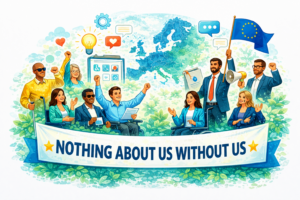
The INCLUDE Project: Inclusive Leadership and Democratic Engagement for Persons with Disabilities is a transnational initiative designed to strengthen democratic participation by empowering people with disabilities to take on leadership roles in their communities, institutions and across Europe. Based on the principle "Nothing about us without us", INCLUDE tackles the persistent under-representation of people with disabilities in civic and political life by providing the resources, training and visibility needed to drive change. This project aims to to strengthen democratic participation by empowering people with disabilities to take on leadership roles in their communities, institutions and across Europe. In this project, we will be developing resources for people with disabilities and for the professionals who work with them on a daily basis.
Objectives
– To raise awareness across Europe of the lack of representation of people with disabilities in leadership and decision-making roles, and to promote a shift in public perception towards inclusive and participatory governance.
– To raise awareness amongst both people with disabilities and the general public – in particular local authorities, policy-makers and academics – of the importance of inclusive leadership, through the development of interactive and accessible training and awareness-raising materials.
– To co-create a practical and creative end product: a Resource Kit for Inclusive Representation, which will serve as a resource for local authorities, NGOs and EU institutions to promote and implement participatory practices that involve people with disabilities in leadership roles.
Target Audiences:
- People with disabilities, particularly those interested in advocating for rights, civic engagement and leadership. We aim to amplify their voices, equip them with tools and confidence, and support their meaningful participation in democratic processes.
- Decision-makers and representatives of local authorities, who have the institutional power to create inclusive policies, promote diversity in recruitment and support leadership programmes for people with disabilities. Their involvement is crucial to long-term impact and sustainability.
- Policy-makers and members of the academic community, as they influence narratives, develop training programmes and shape future legal and institutional frameworks. Their involvement ensures the project’s relevance, transferability and integration into a broader policy and research discourse.
Expected Results
– Inclusive Representation Toolkit: Practical recommendations, templates, case studies and step-by-step guidance for local authorities and institutions.
– Accessible Leadership Training Modules: A modular training programme (based on the Inclusive Representation Toolkit) covering leadership skills, civic engagement, advocacy, public speaking and democratic participation.
Activities
Work Package 2: Toolkit on Inclusive Representation
– Participatory Research on Barriers and Good Practices: To carry out national-level studies in each partner country to identify current obstacles, gaps and existing good practices with regard to the leadership and political representation of people with disabilities. The study will draw on both a literature review and consultations with stakeholders and will ensure that approaches take account of gender and diversity issues.
– Focus Groups with persons with disabilities and professionals: Organise focus groups in each partner country, involving people with disabilities, professionals and family members/carers, to gather first-hand information about their experiences, challenges and ideas for promoting leadership and representation. The focus groups will include people with a range of disabilities, from different age groups and of different genders, and will form the basis for the content of the Inclusive Representation Toolkit.
– Drafting the Inclusive Representation Toolkit: Based on the research findings and the outcomes of the focus groups, draw up the first draft of the Inclusive Representation Toolkit. The draft will include practical recommendations, templates, case studies and step-by-step guidance for local authorities and institutions. The content will be developed in an accessible and easy-to-implement format, using inclusive and non-discriminatory language.
– Methodology Testing and Piloting of the Toolkit: Test the preliminary Inclusive Representation Toolkit in selected municipalities and civil society organisations in the partner countries. Collect structured feedback through user testing sessions, interviews and surveys. Analyse the feedback to assess clarity, relevance, usability and accessibility, ensuring that all disability- and gender-related aspects are adequately addressed.
– Local workshops for final validation and capacity building: Organise a series of local workshops to present the piloted Inclusive Representation Toolkit to wider groups of stakeholders (for example, local authorities, NGOs, organisations representing people with disabilities) and gather final feedback. The workshops will also be used to build the capacity of local stakeholders to implement the recommendations set out in the resource pack within their own contexts.
Work Package 3: Leadership Training for Persons with Disabilities
– Development of Accessible Leadership Training Modules: To design and develop a modular training programme (based on the Inclusive Representation Toolkit) covering leadership skills, civic engagement, advocacy, public speaking and democratic participation. The training content will be inclusive, accessible (easy-to-read versions, compatible with screen readers), gender-sensitive and adaptable to different disabilities and national contexts.
– Recruitment and preparation of participants: Identify and recruit people with disabilities, ensuring diversity in terms of gender, age and types of disability. Prepare participants through introductory sessions that address any initial barriers, such as a fear of public speaking or a lack of previous civic engagement.
– Delivery of national training sessions: To organise and run at least one national training event, using interactive, participatory and non-formal educational methods. The sessions will promote peer learning, group exercises and direct interaction with mentors and local decision-makers, wherever possible.
– Mentorship and peer support activities: To facilitate internal mentoring opportunities amongst participants and with external role models (leaders with disabilities or advocates of inclusive leadership).
– Evaluation of training activities: Conduct pre- and post-training assessments (using questionnaires) to measure participants’ increased knowledge, changes in attitude and confidence in leadership. Analyse the results broken down by gender, age and disability to assess the effectiveness and inclusiveness of the training.
Work Package 4: Public Engagement, Visibility and Awareness-Raising
– Presentation of the project’s progress on social media and the consortium partners’ websites.
– Organisation of the project’s final conference: The conferences will present the results of the projects, launch the Inclusive Representation Toolkit and provide a platform for dialogue between people with disabilities, policy-makers, local authorities and civil society.
Available Resources
Project Activities Gallery
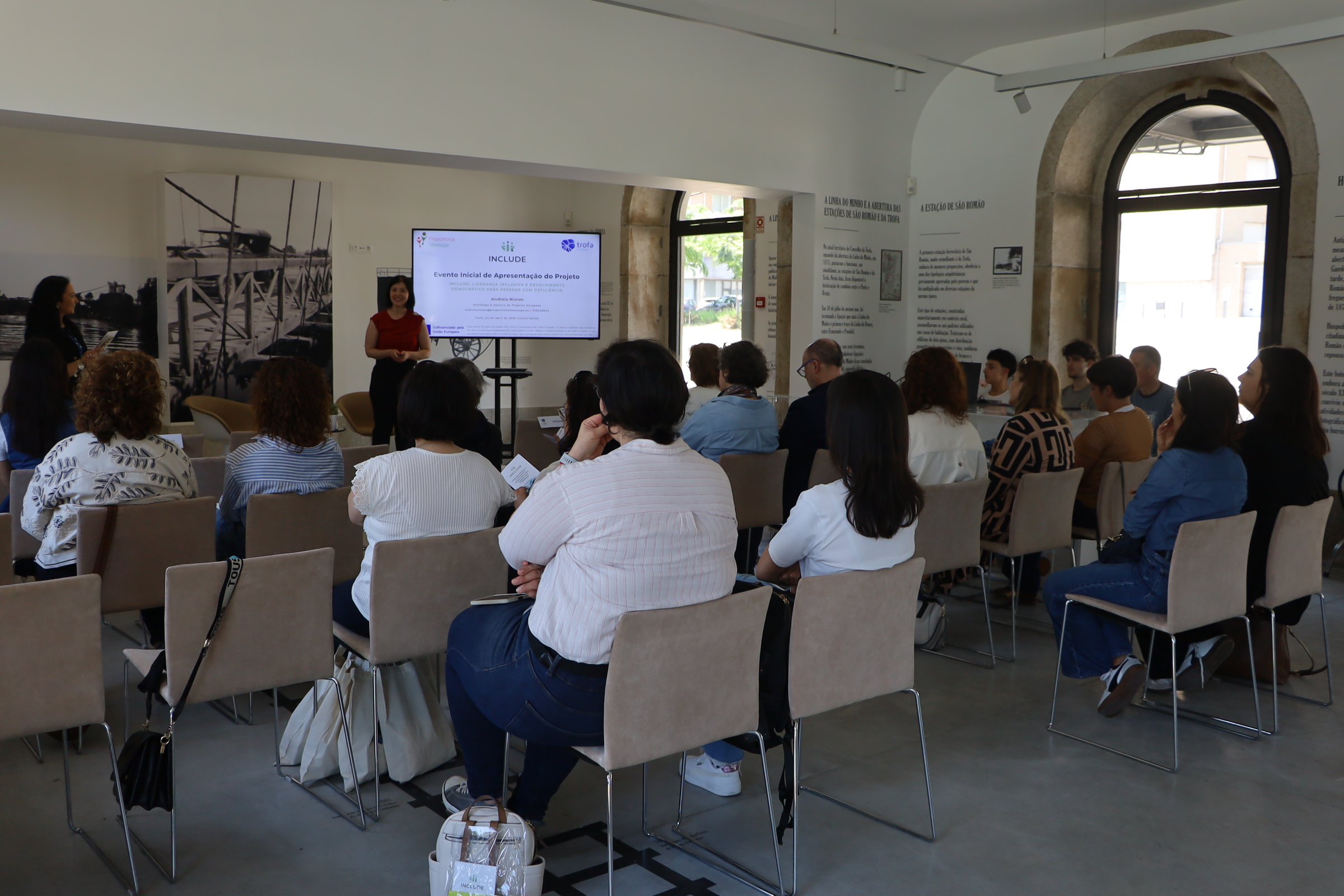
Project Kick-off Event – April 2026
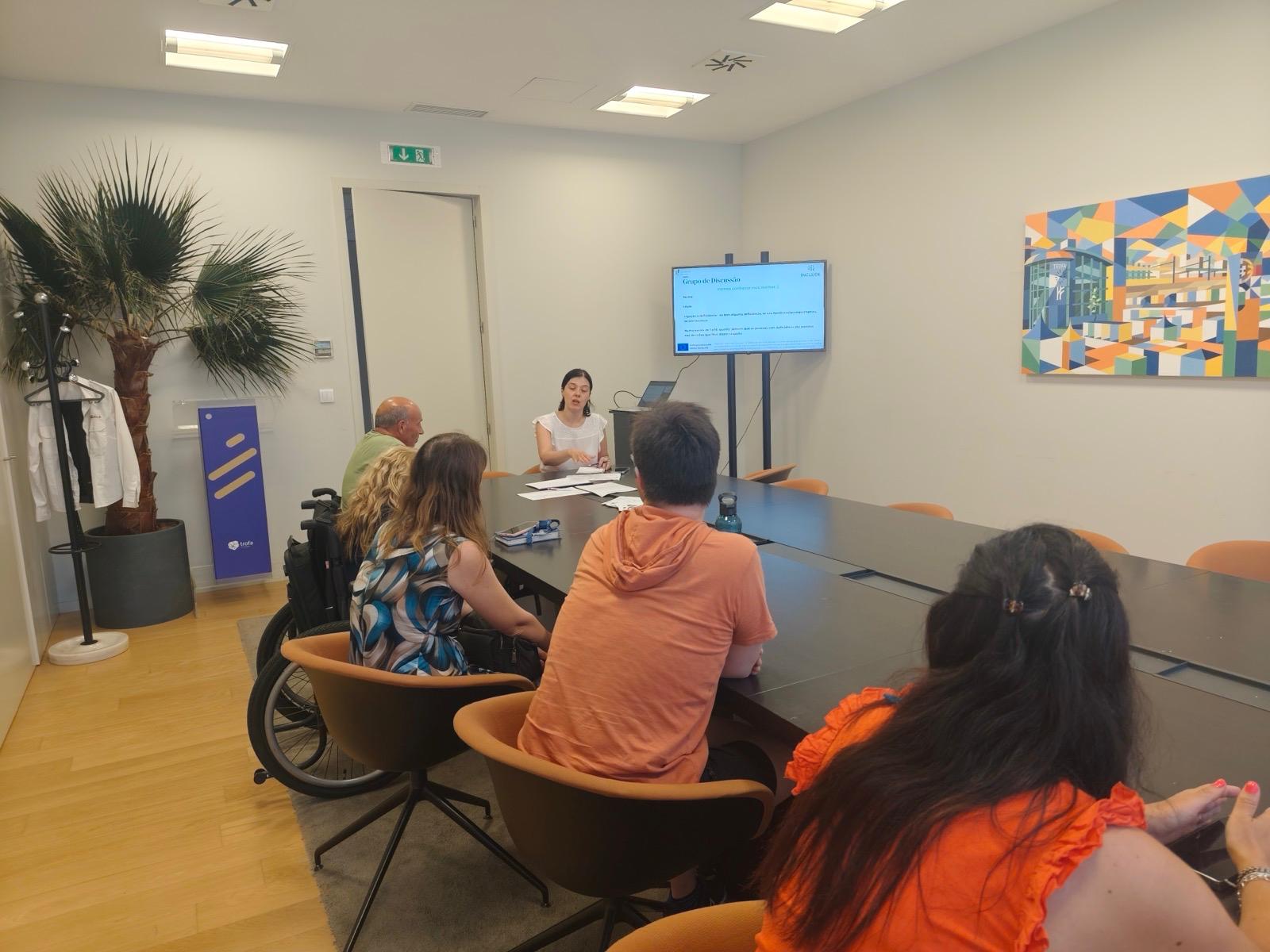
Focus Group with People with Disabilities and Professionals – July 2026
News
Projeto INCLUDE: Liderança Inclusiva e Envolvimento Democrático de Pessoas com Deficiência – O que Fizemos no Primeiros 6 Meses do Projeto?
O projeto INCLUDE: Liderança Inclusiva e Envolvimento Democrático de Pessoas com Deficiência, iniciado em fevereiro de 2026, é uma iniciativa transnacional concebida para reforçar a participação democrática, capacitando as pessoas com deficiência para assumirem papéis...
Never Gets Old Newsletter #3 – Educação Intergeracional em torno do Género, da Sexualidade e da Diversidade na Terceira Idade
Nesta edição, partilhamos os mais recentes desenvolvimentos do projeto, incluindo as atividades realizadas pelos parceiros, os progressos alcançados e as iniciativas que estão a promover uma visão mais inclusiva e positiva da sexualidade na idade avançada. Ao longo...
Envelhecimento, Identidade e Intimidade: Sessões de Formação AgeWise em Portugal, Alemanha, França e Chipre
Nas últimas semanas, o projeto Never Gets Old implementou com sucesso um conjunto de sessões de pilotagem para apresentar e testar os módulos do Manual AgeWise. Estas sessões decorreram em vários países parceiros — Portugal, Alemanha, França, Roménia e Chipre — e...
Never Gets Old Newsletter #2 – Educação Intergeracional em torno do Género, da Sexualidade e da Diversidade na Terceira Idade
Nos últimos meses, os parceiros do projeto promoveram sessões inspiradoras de diálogo intergeracional em vários países europeus, criando espaços seguros para conversas entre pessoas mais velhas e profissionais de saúde. Através da metodologia de "speed dating", estas...
Reunião do DIAMOND em Berlim 💎
Nos dias 4 e 5 de dezembro de 2025, os parceiros do projeto DIAMOND Empower reuniram-se em Berlim para dois dias de colaboração, reflexão e planeamento conjunto. Estes encontros reforçaram aquilo que está no centro do DIAMOND: colocar as pessoas no centro das soluções...
Never Gets Old Newsletter #1 – Educação Intergeracional em torno do Género, da Sexualidade e da Diversidade na Terceira Idade
Siga-nós também nas redes sociais! Facebook | Instagram
Gardens4All Newsletter #4 – Promover a Inclusão Social de Migrantes e Refugiados através da Criação de Hortas Comunitárias
Estamos entusiasmados em compartilhar a nossa última Newsletter sobre os eventos finais do projeto Gardens4All! Juntos, estamos a criar um futuro mais verde e inclusivo para todos, com foco nas populações em situação de vulnerabilidade. Em 7 países europeus,...
Gardens4All Newsletter #3 – Promover a Inclusão Social de Migrantes e Refugiados através da Criação de Hortas Comunitárias
Hoje estamos a partilhar convosco a nossa newsletter do Gardens4All! Estamos a trabalhar com toda a motivação no nosso Manual de Jardinagem e Horticultura Terapêutica em que iremos partilhar muitas ideias para os ajudar a iniciar ou melhorar o vosso projeto de horta...
Train-Sustain: Reunião Transnacional e Conferência Final no Porto
TRAIN SUSTAIN Foi um prazer receber os nossos parceiros do projeto Train-Sustain no Porto, entre os dias 22 e 24 de abril 2024, para a nossa última reunião transnacional. Ao longo de dois anos muito produtivos, partilhámos ideias e reflexões sobre como promover a...
Newsletter AgroBUS #5
Visita o nosso website do projeto: AgroBUS – Erasmus+ Siga-nós no Facebook!
The project
INCLUDE – Inclusive Leadership and Democratic Engagement fro Persons with Disabilities (CERV-2025-CITIZENS-CIV, Project No. 101252776)
Project Number
101252776
Implementation Date
01/02/2026 – 30/01/2028
24 months
Funding
CERV-2025-CITIZENS-CIV
Info & Contact Details
andreianunes@proportionalmessage.eu – Andreia Nunes
Partnership
Coordinator
MOVEO – VEREIN FUR SOZIALE NACHHALTIGKEIT UND INKLUSION VON MENSCHEN MIT BEHINDERUNG
 Austria

Partner
Equality NGO – Association for Active Inclusion and Appropriate Treatment of Persons with Disabilities EQUALITY Skopje
North Macedonia
Partner
ODTIZ – ZAVOD ZA IZOBRAZEVANJE IN INKLUZIJO ODTIZ (Institute for Education and Inclusion)
Slovenia
 English
  Portuguese